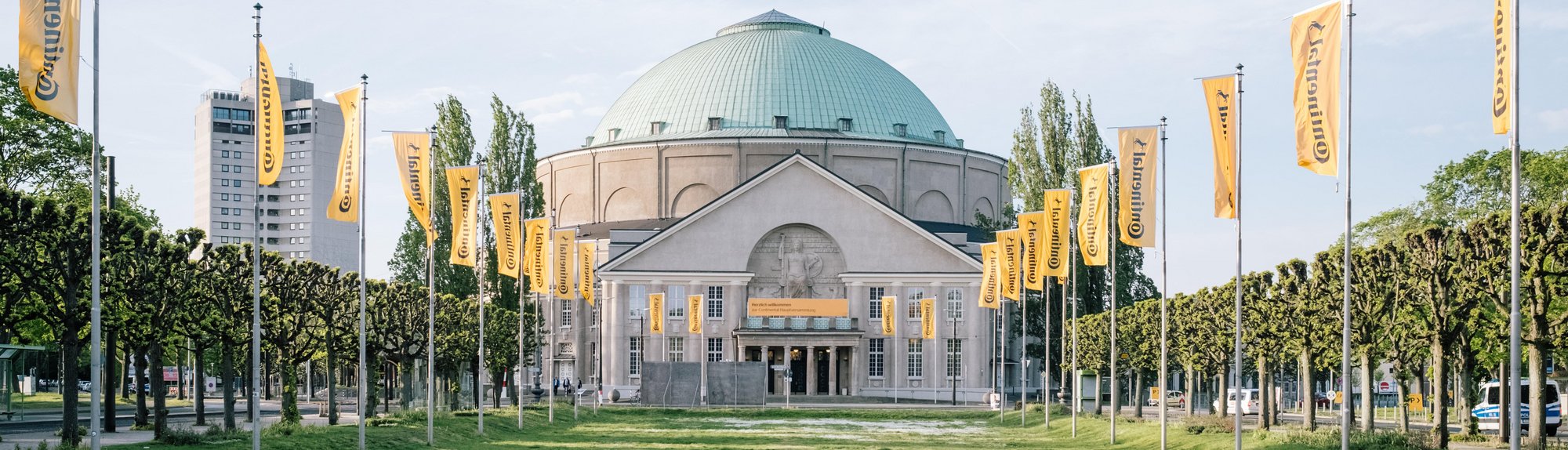


Welcome to Continental
Continental develops pioneering technologies and services for sustainable and connected mobility of people and their goods. Founded in 1871, the technology company offers safe, efficient, intelligent and affordable solutions for vehicles, machines, traffic and transportation. Learn more

Majority of Drivers in Germany in Favor of Health Checks

Almost two-thirds of drivers in Germany believe regular health checks are a sensible way to determine whether people are fit to drive. This is the result of a representative survey of some 2,000 German citizens conducted by market research and data analytics firm YouGov on behalf of Continental. The findings also show that the older the respondents, the less likely they are to agree with this statement. While 75 percent of 18 to 29-year-olds are in favor of this proposal, only around half of those over 70 are of the same opinion.
Across all age groups, it is clear that the increasing use of modern advanced driver assistance systems is making drivers feel safer behind the wheel. “The results show that advanced driver assistance systems support drivers on the road, thus living up to their name. As advanced driver assistance systems become more readily available in vehicles, their acceptance is also growing and will only continue to do so,” says Gilles Mabire, chief technology officer (CTO) for Automotive at Continental.


Sustainability at Continental
Sustainability is anchored in the foundation of our values. They form the basis of our work, they guide our company and they will take us into the future.
About Continental

Continental develops pioneering technologies and services for sustainable and connected mobility of people and their goods.
We offer safe, efficient, intelligent, and affordable solutions for vehicles, machines, traffic and transportation.
Sustainable management and social responsibility are among our fundamental values. They form the basis of our work, they guide our corporate strategy and they will take us into the future.
In 2022, Continental generated sales of €39.4 billion and currently employs around 200,000 people in 57 countries and markets.
Our Vision/Mission define why we do what we do. To achieve this, we pursue a clear strategy. In implementing this, we make decisions and act according to principles that are critical for success. Our four values Freedom To Act, Passion To Win, For One Another and Trust guide us. They show how we work, lead and make decisions together. They remind us of what makes us strong and of what matters.
In 1871, Continental was founded in Hanover, Germany, as Continental-Caoutchouc- und Gutta-Percha Compagnie. On October 8, 2021, Continental celebrated its 150th anniversary.